Choosing a carrier for cats and small dogs
Updated 10 October 2026
Most pets only see a carrier on the way to the vet, so they learn to hate it. A good carrier and a bit of preparation make those trips a lot calmer for both of you.
Size
Your pet should be able to stand up, turn around and lie down comfortably. For a small dog, measure from the nose to the base of the tail and from the floor to the top of the shoulder, then add a few centimetres to each.
For cats, bigger isn't better. Cats feel safer in a snug space, and in a large carrier they slide around every time the car brakes. Go for just enough room, not extra.
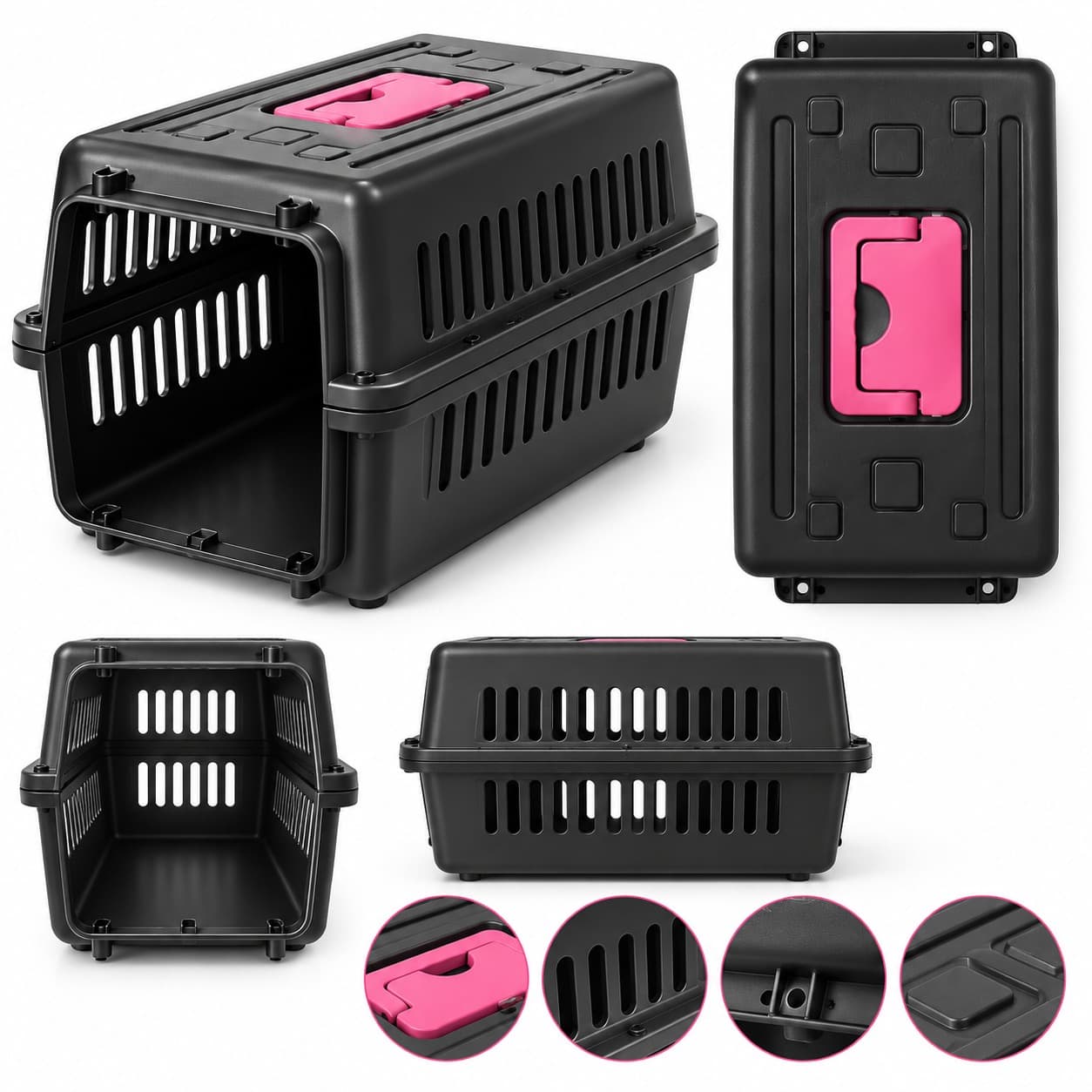
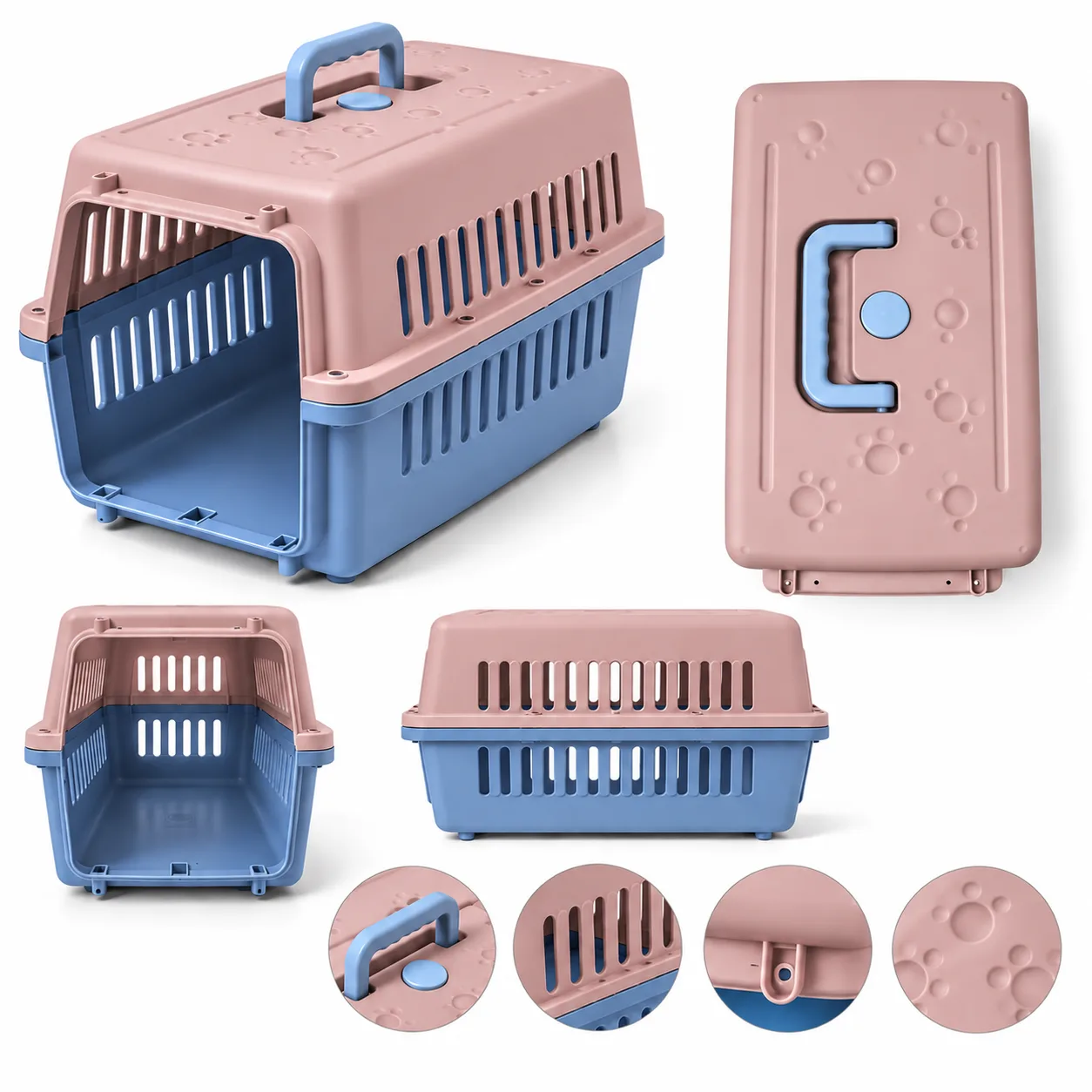
Our Jet Box measures 48 × 31.5 × 30 cm, which fits most cats and small dogs up to about 5 kg comfortably.
Hard or soft
For cats, the usual advice is a hard plastic carrier. It's easy to wipe clean if there's an accident, it protects the cat if it gets knocked, and a determined cat can't claw its way out. Cardboard carriers don't stand a chance.
Look for one where the top comes off, or that opens from the top. Lowering a nervous cat in from above is far easier than pushing it through a front door. At the vet, the top can be lifted off so the cat is examined sitting in the base, which is much less stressful for it. Our Jet box for Cats and Puppies splits into top and base for this reason.
Soft carriers suit small, calm dogs and are lighter to carry, but they give less protection.
Air
Vents on at least three sides. Pakistani summers are the reason this matters more than anything else on the list.
Getting a cat used to it
- Leave the carrier out at home with the door open, so it becomes part of the furniture rather than a sign that the vet is coming.
- Put a familiar blanket inside, or an old T-shirt that smells of you.
- Drop treats inside, or put a meal in there now and then. Let the cat go in and out on its own.
- Do this for a few days before a trip, not ten minutes before.
On the journey
- Wedge the carrier in the footwell behind a front seat, or strap it onto the back seat with a seatbelt, so it can't slide or tip.
- Never on the front seat. An airbag going off can kill a small animal.
- Carry it level, holding it from underneath, not swinging from the handle.
- Line it with a towel or an absorbent pad. A light cloth over the top can calm a cat, but not in hot weather.
- For a long trip, skip food for a few hours beforehand in case your pet gets carsick.
Heat
Never leave a pet in a parked car, not even for two minutes. On a mild day the inside of a car warms up by around 10°C in ten minutes, and a Lahore summer is not a mild day.
In summer, travel early in the morning or after sunset, and run the car's AC before the pet goes in. On a motorbike or in a rickshaw there's no shade, so keep the carrier out of direct sun and make sure the vents aren't covered. Flat-faced breeds overheat faster than other pets, and Persian cats, very common here, are one of them. Panting, drooling or a cat that seems floppy and distressed needs cooling and a vet straight away.
This is general advice from a pet shop, not a substitute for a vet. If your pet seems unwell, ring your vet.