How to choose a cat shampoo
Updated 10 October 2026
Most cats never need a bath. They spend a good part of the day cleaning themselves and do it well. So the first question isn't which shampoo, it's whether your cat needs one at all.
When they do, it's usually for a reason you can see: the coat is greasy or sticky, the cat has got into something, a long-haired cat is starting to mat, or an older or overweight cat can no longer reach to groom properly. Some skin problems need regular bathing too, but that's for your vet to prescribe.
Why not your own shampoo, or the dog's
Human shampoo, baby shampoo included, is made for human skin, which is more acidic than a cat's. It strips the oils that protect a cat's skin and can leave it dry and itchy.
Dog shampoo is a bigger risk. Many flea shampoos and spot-on treatments for dogs contain permethrin, which is safe on dogs and seriously poisonous to cats. Even a small amount can cause twitching, trembling and fits. If you have a dog that has just been treated, keep the cat away from it for three days. And if your cat ever shows those signs after a flea product, go to a vet straight away.
Essential oils are the other thing to avoid. Tea tree oil in particular is toxic to cats, and whatever goes on the coat ends up being licked off.
Which type of cat shampoo
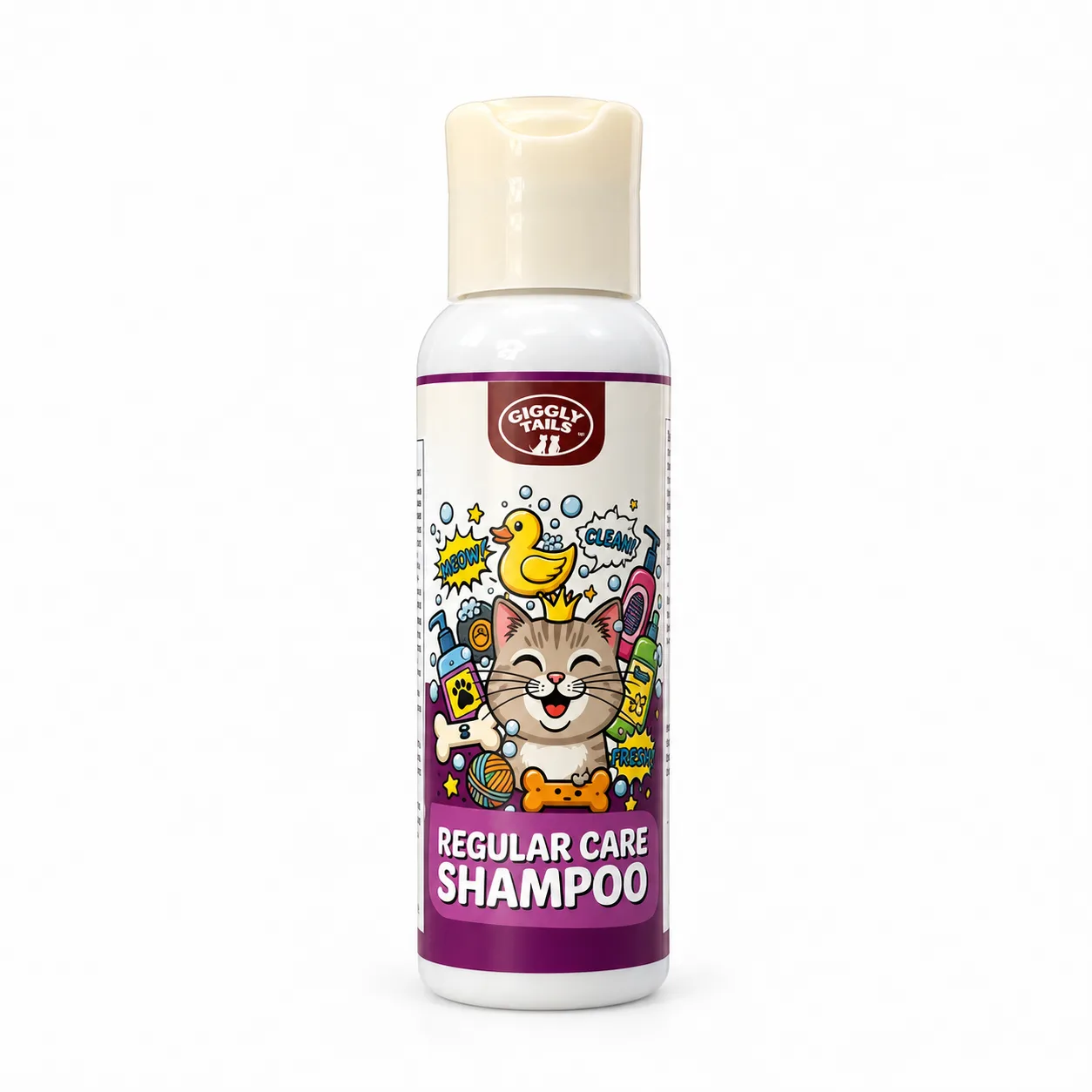
- Everyday or regular care: for a cat that just needs a clean. Something like Giggly Tails Regular Care Cat Shampoo.
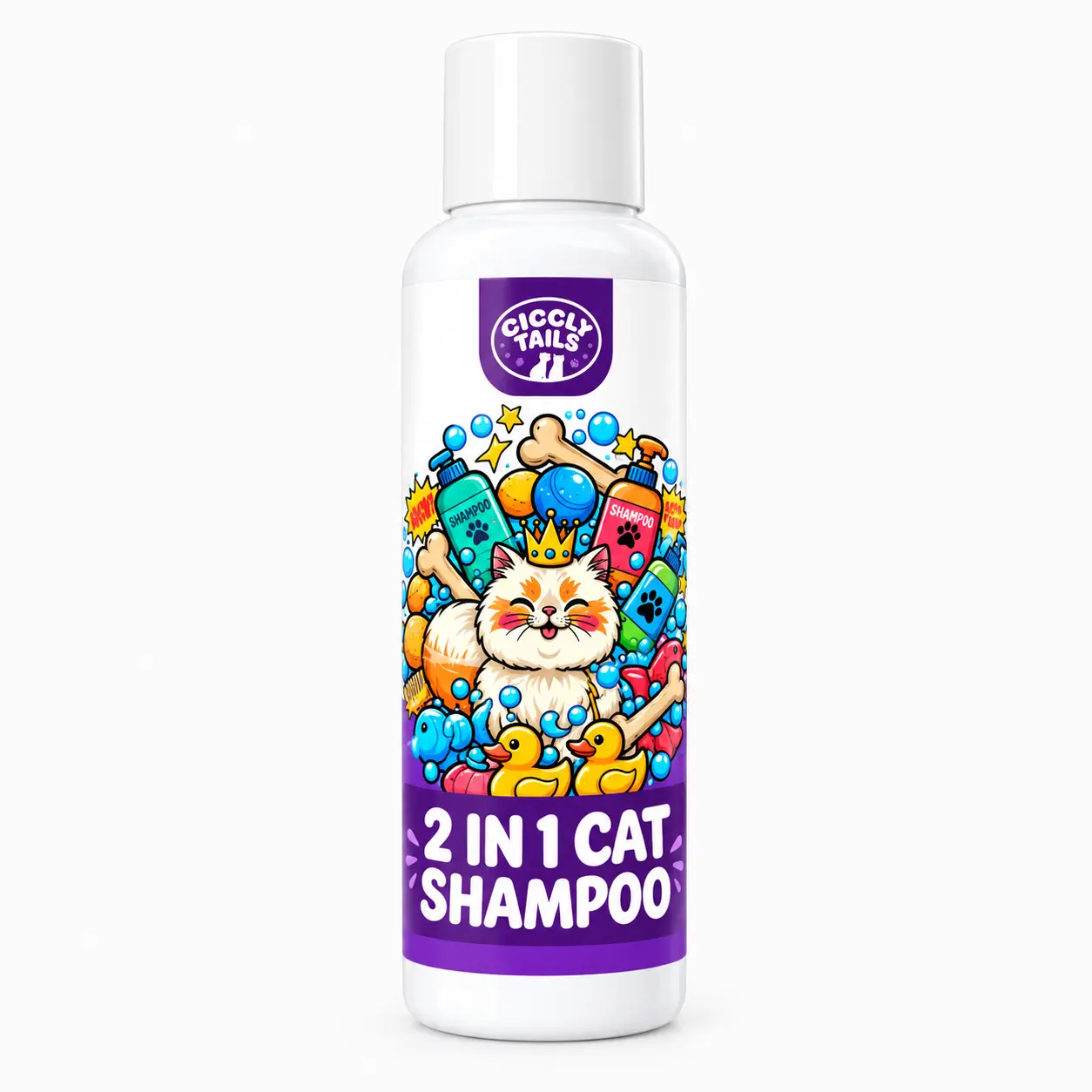
- 2-in-1 (shampoo and conditioner): one product, one rinse. With a cat that matters, because patience runs out fast. Giggly Tails 2 in 1 is the one we sell most of.
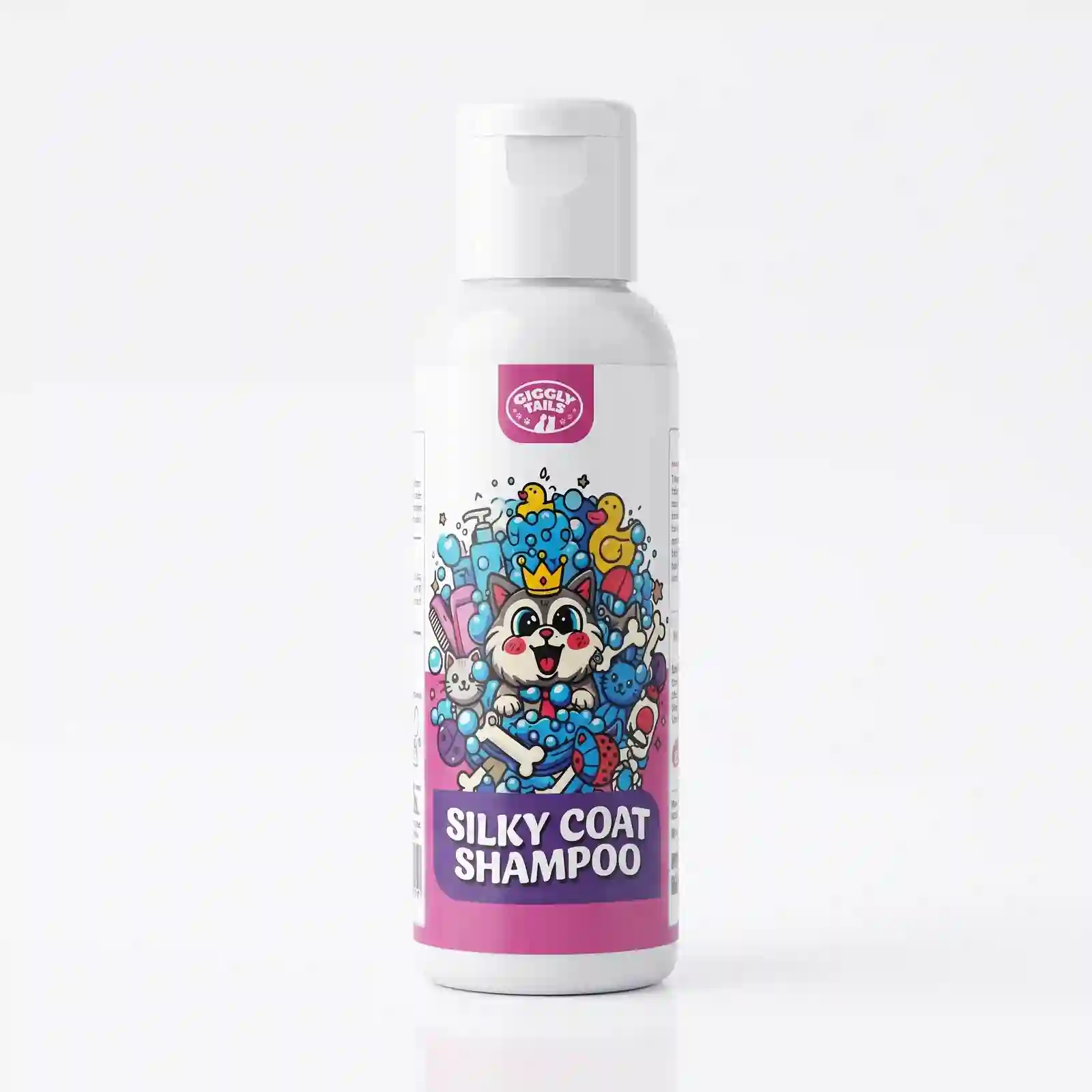
- For dull, rough or tangly coats: Persians and other long-haired cats usually show the difference most. See Silky Coat.
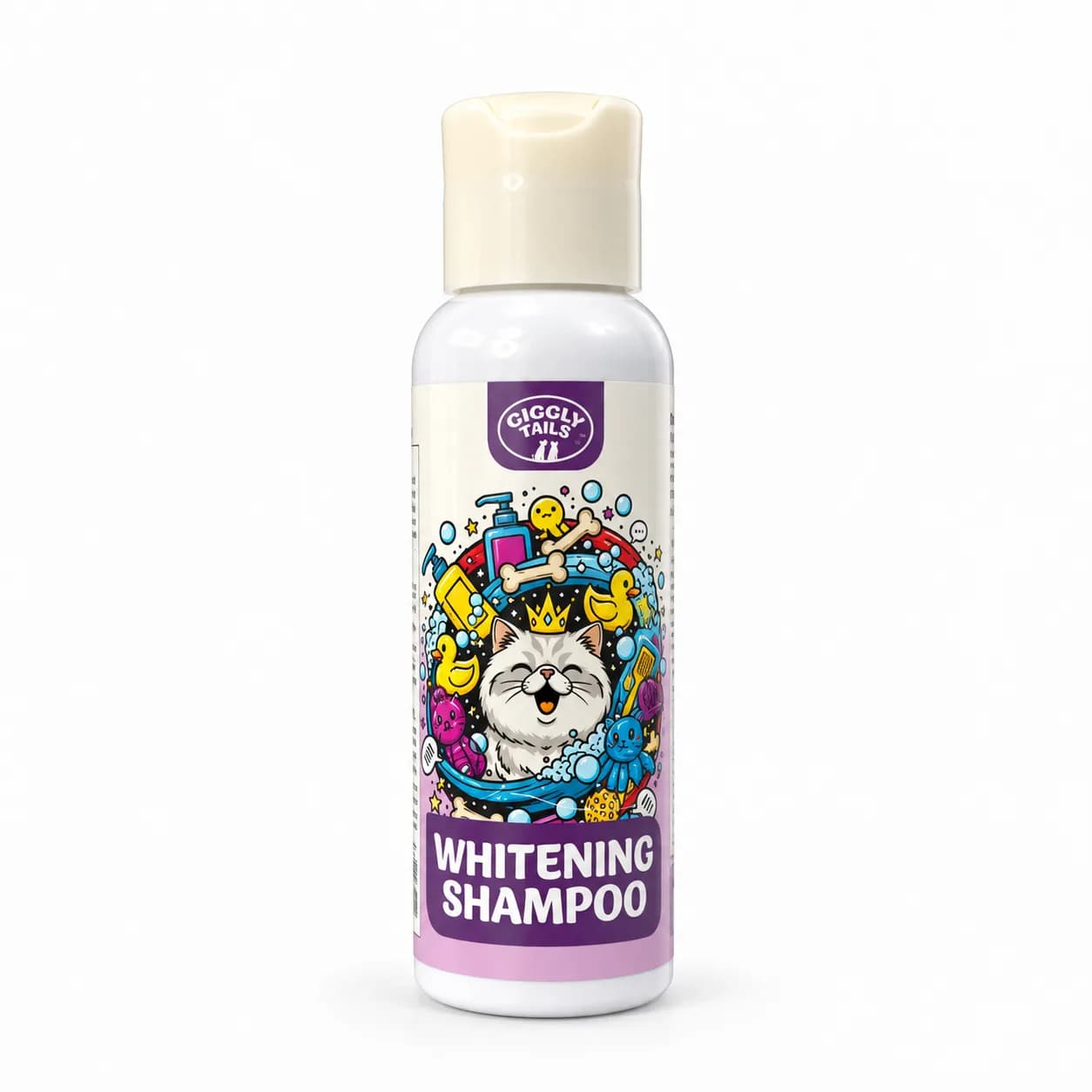
- Whitening: for white and cream coats that have gone yellowish. It brightens the coat but won't remove a stain that has set into the hair; that only goes as the fur grows out. Giggly Tails Whitening is made for cats.
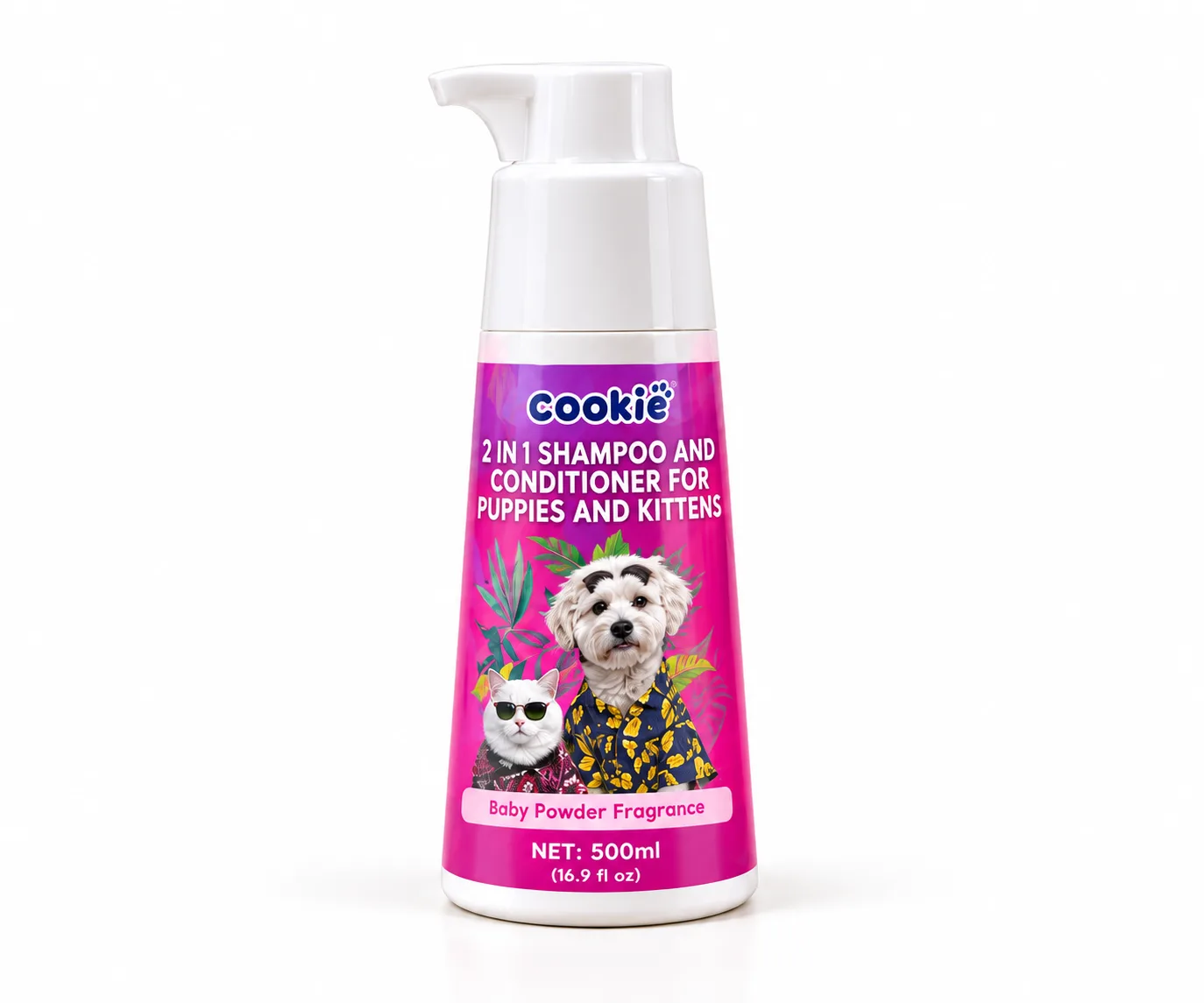
- Gentle or hypoallergenic: for sensitive skin, and for kittens. The Cookie Shampoo & Conditioner for Puppies & Kittens is the mildest we stock.
If your cat is scratching a lot, losing patches of fur, smells, or has flaky or greasy skin that keeps coming back, a shampoo won't fix it. Those need a vet to find the cause first.
Kittens
Wait until a kitten is at least eight weeks old unless it really can't be avoided. Young kittens lose heat quickly and get chilled. If a very young kitten has fleas or has got into something, ask your vet before bathing it. Use a gentle kitten shampoo and dry it completely, especially on a winter evening.
Getting through the bath
- Pick a calm moment, after a play session or a meal, not when the cat is already wound up.
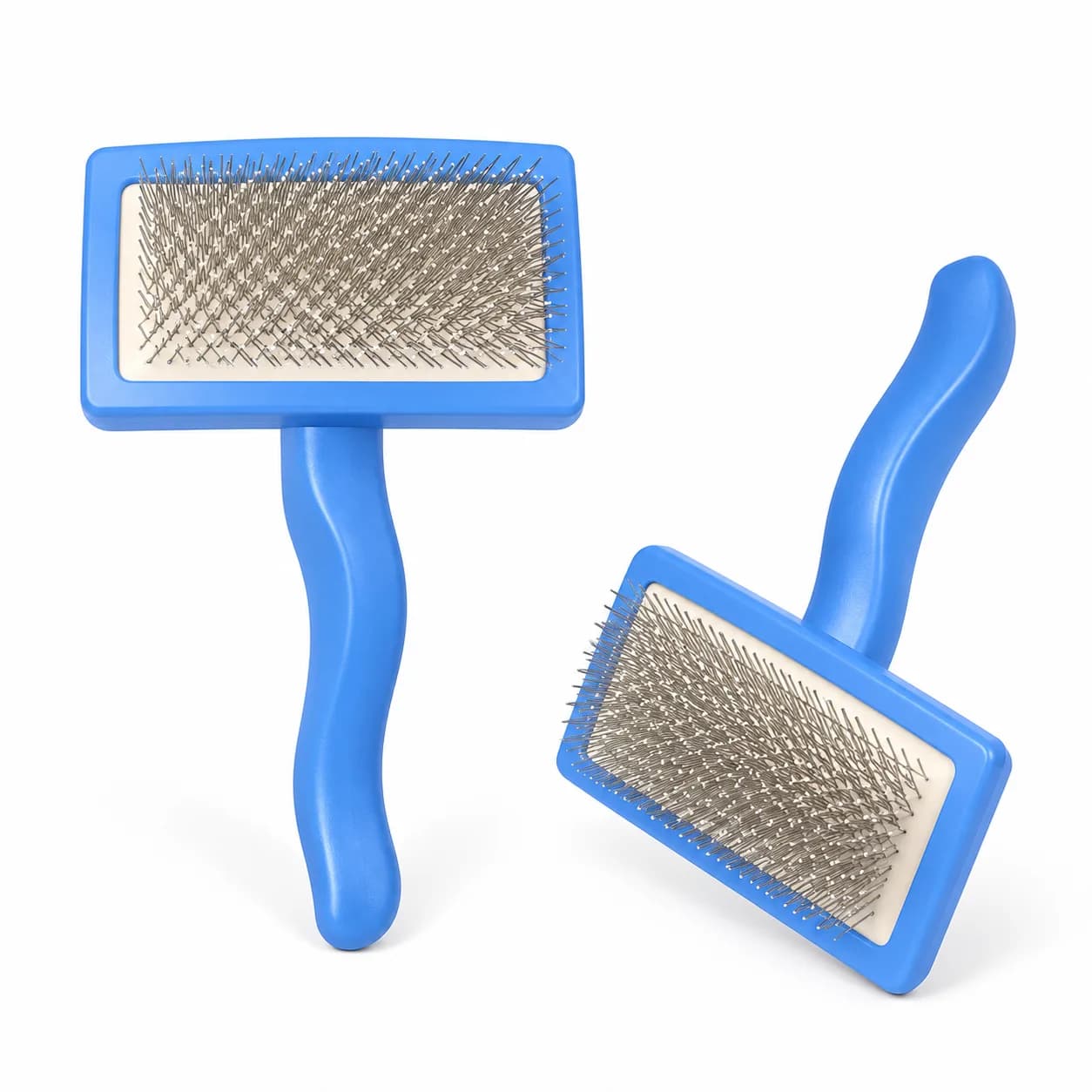
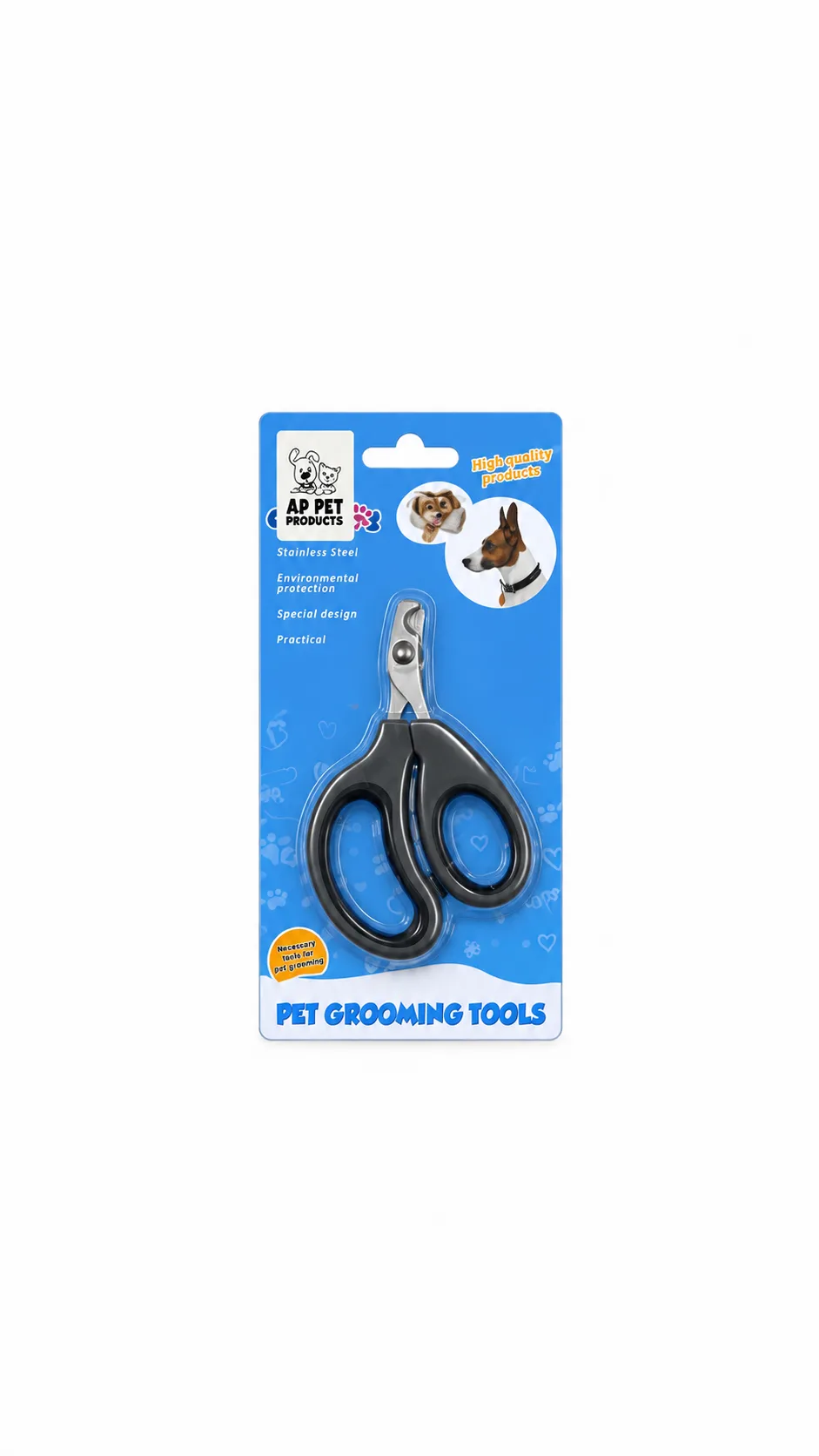
- Trim the claws and brush out any knots first. Water tightens mats. A slicker brush does most of the work.
- Put a towel or rubber mat in the sink or tub so the cat isn't sliding around, and use a few inches of lukewarm water, not hot.
- Keep water out of the ears, eyes and nose. Wipe the face with a damp cloth instead of washing it.
- Dilute the shampoo in water, roughly one part shampoo to five of water, and work it in from the neck down to the tail.
- Rinse, then rinse again. Leftover shampoo irritates the skin, and the cat will lick its coat afterwards anyway.
- Wrap the cat in a big towel and keep it somewhere warm and out of a draught until it is fully dry. A hair dryer on the lowest setting is fine if your cat will put up with it.
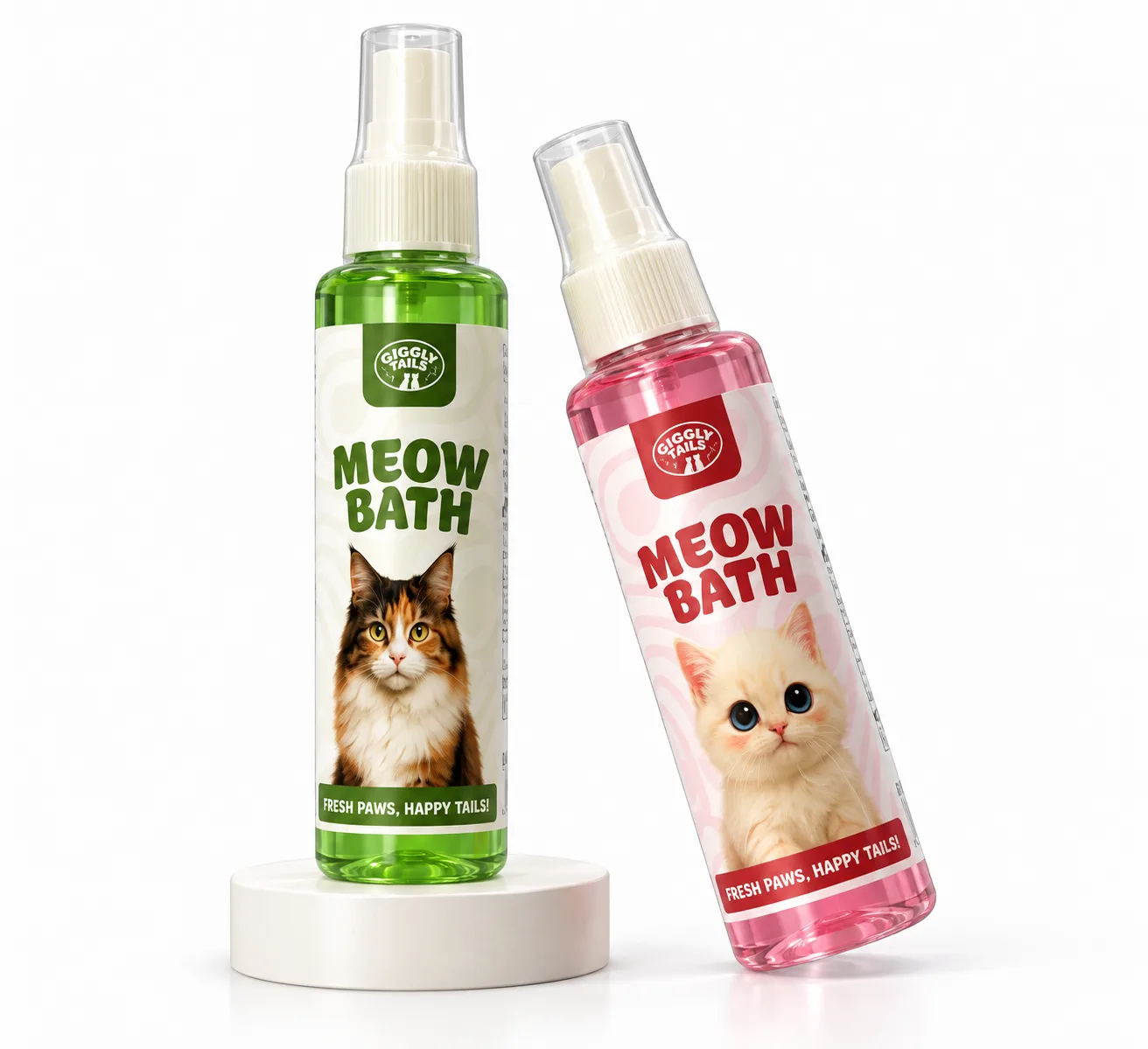
Between baths, a light spray like Meow Bath freshens a coat that smells a bit stale. Keep it away from the face, and skip it on broken or sore skin.
Hard water and Lahore dust
Tap water in a lot of Pakistani cities is hard, and hard water makes shampoo harder to rinse out. Take an extra minute rinsing. As for dust: a dusty coat on its own isn't a reason to bathe. A good brush usually takes care of it.
This is general advice from a pet shop, not a substitute for a vet. If your pet seems unwell, ring your vet.