Dog treats and chews: what's safe
Updated 10 October 2026
Treats are one of the easiest ways to make a dog happy and one of the easiest ways to make it fat. A few simple rules keep treats on the right side of that line, and make chewing safe.
How many
Treats and chews together should make up no more than about a tenth of what your dog eats in a day. The other nine tenths should be its proper food. Everything counts towards that tenth: training rewards, chews, and the bits of roti that get handed down at dinner.
Chews carry more than people think. One study of bully sticks found a single 15 cm stick held close to a third of a small dog's daily calories. If your dog gets a big chew, cut its meal back a little that day.
Picking a chew
- Size: big enough that your dog can't fit the whole thing in its mouth. A chew that's too small can be swallowed whole or choked on.
- Hardness: try the thumbnail test. If you can't press a dent into it with your nail, it is hard enough to crack a tooth. Very hard chews like antlers and hooves are a common cause of broken teeth.
- Supervise, especially with something new. Take the chew away once it's worn down small enough to swallow, and throw the end away.
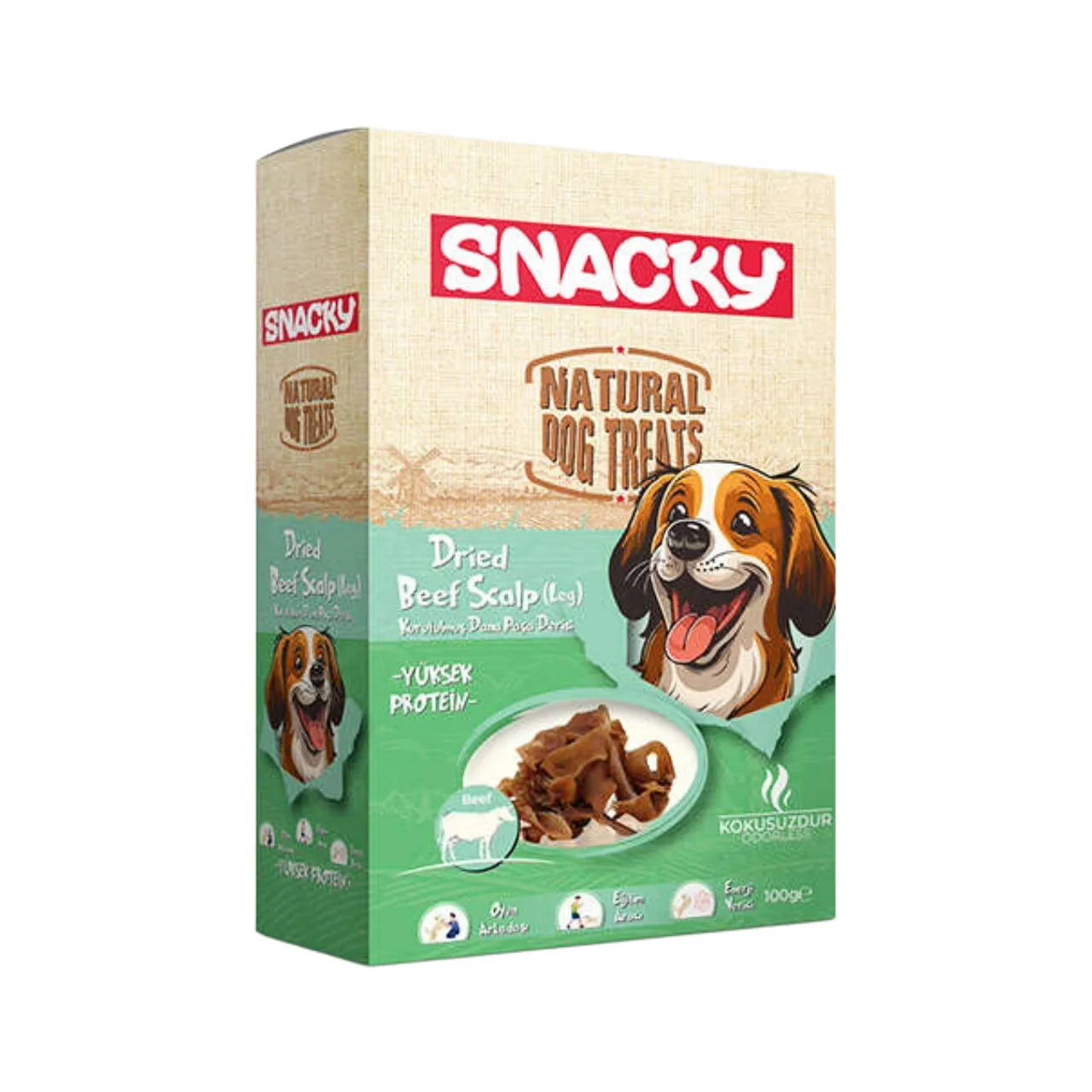
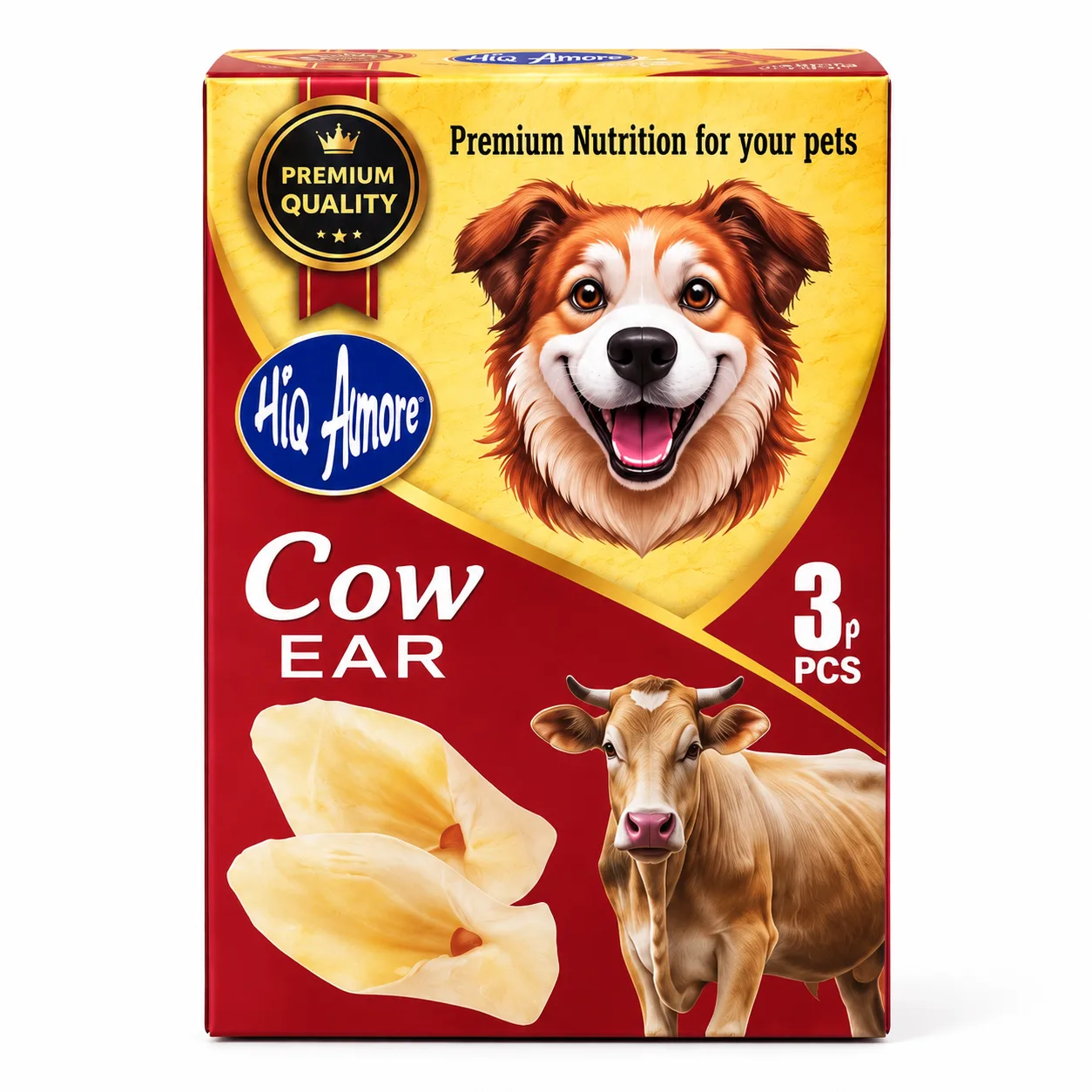
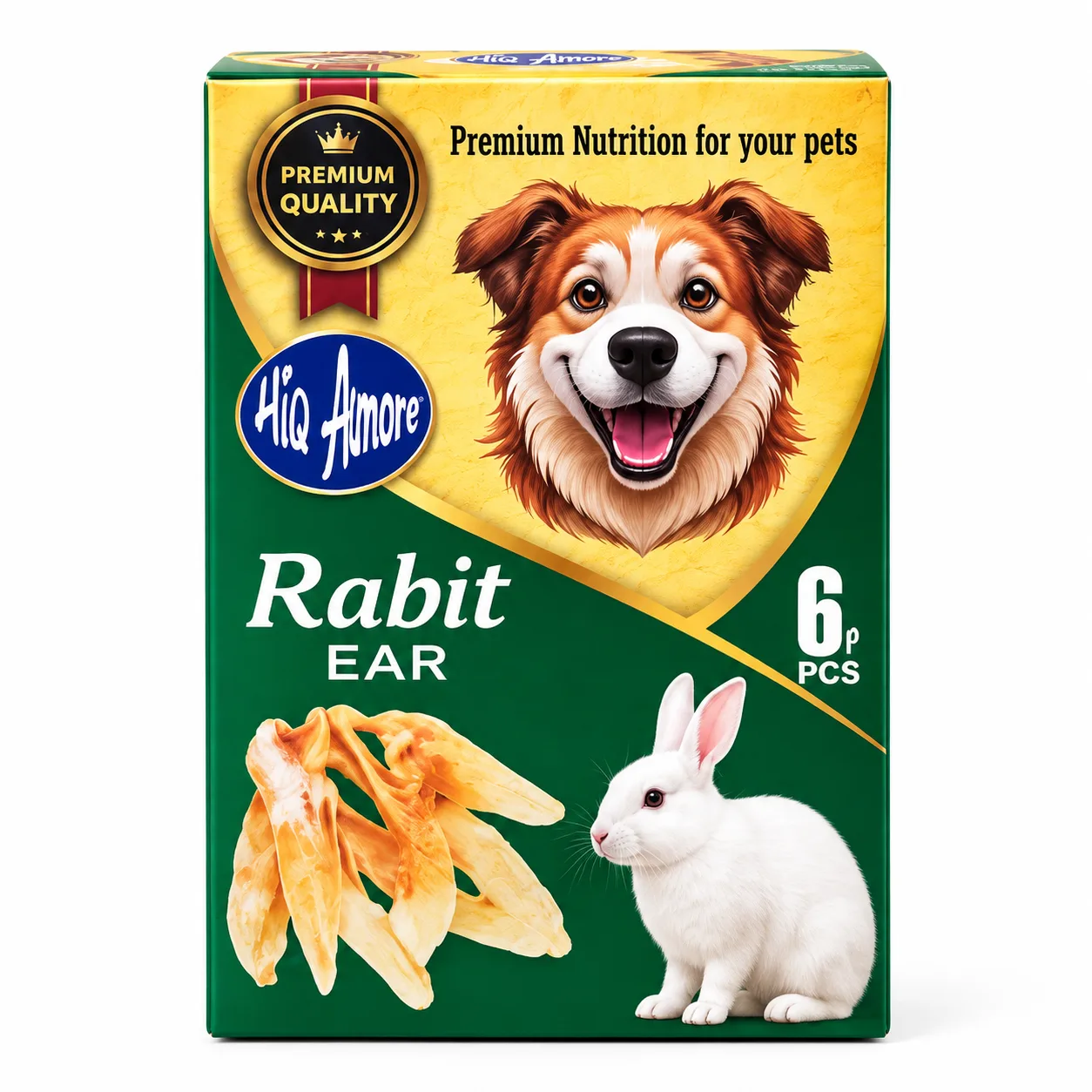
- Natural dried chews like cow ears, rabbit ears or Snacky's dried beef scalp are simply dried meat. They're fine for most dogs in moderation. Wash your hands after handling them, as you would with raw meat.
- Rawhide is hard to digest, and swallowed chunks can cause a blockage. It's best avoided for puppies and dogs that gulp.
No cooked bones
Cooked bones splinter into sharp pieces that can cut the mouth, get stuck in the throat, or tear or block the gut. That includes chicken bones, and the leftover bones from karahi, nihari or a barbecue. Bin them where the dog can't get at them.
Smoked and baked 'bone treats' sold in packets have also been linked to choking, blockages and deaths. Raw bones are something some vets recommend and others don't. Ask yours before trying them.
Training treats
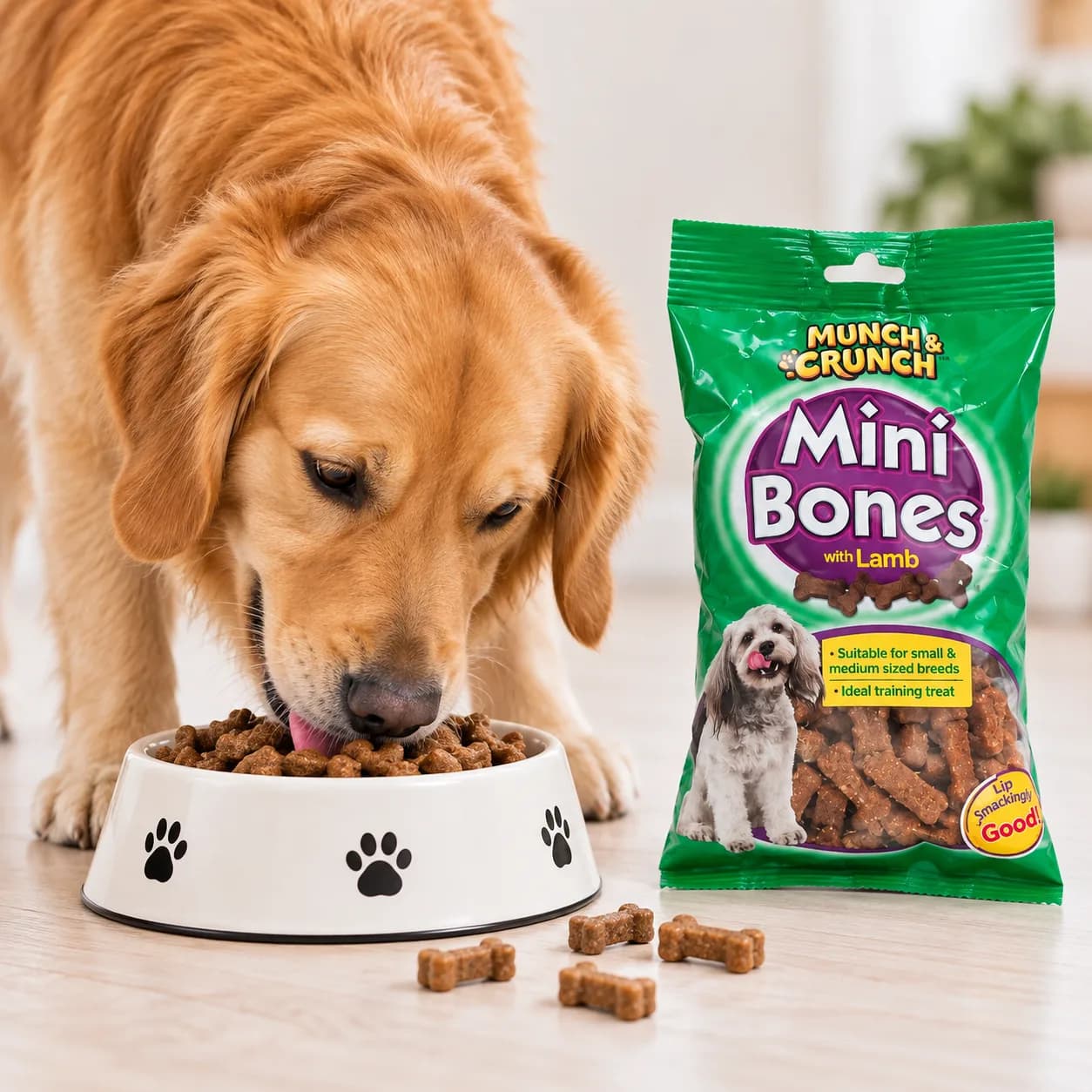
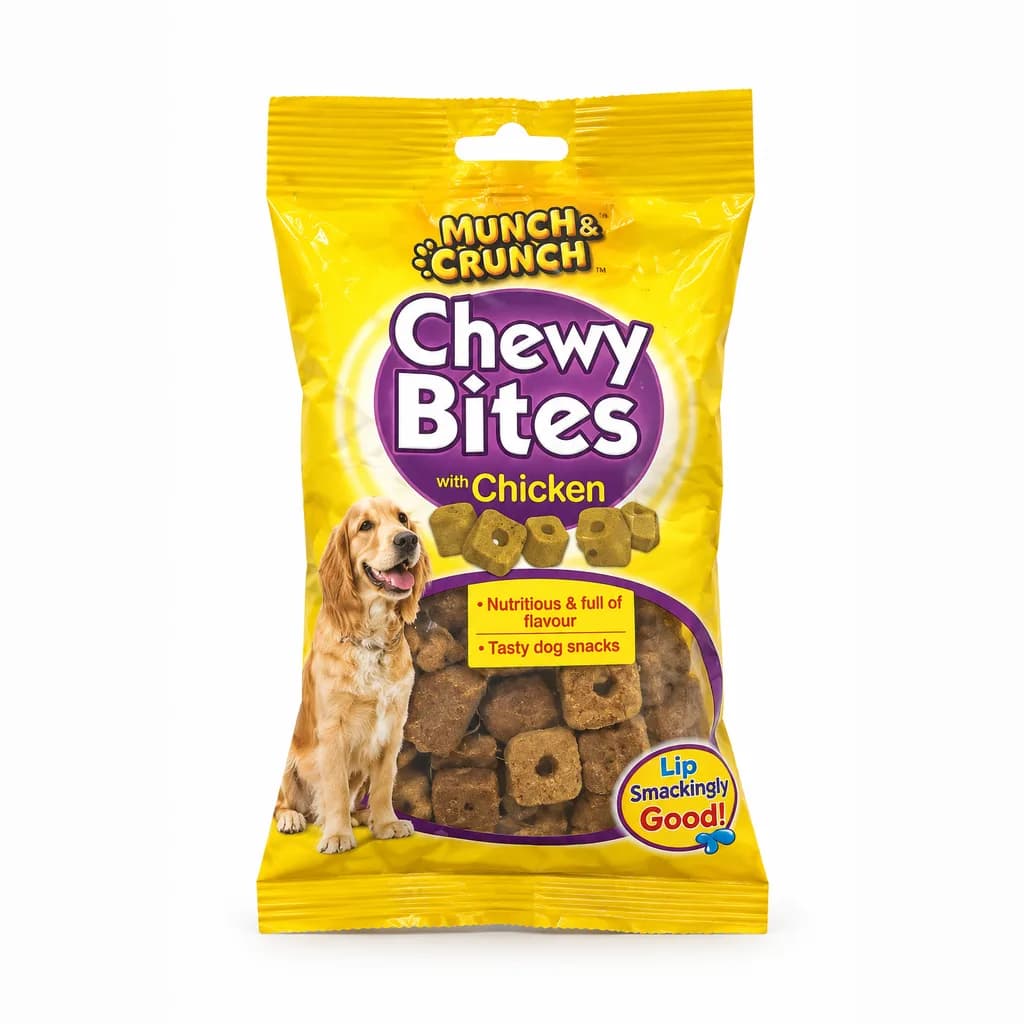
Small is the point. Training works best with lots of quick rewards, so each one should be tiny, about the size of a pea, even for a big dog. Something soft that can be eaten in a second keeps the lesson moving. Small treats like Munch & Crunch Chewy Bites are made for this. Count them in the day's total.
Teething puppies
Puppies start losing their baby teeth at around three to four months, and the adult set is usually in by six months. There's often a second chewing phase at eight to ten months. Sore gums are why your puppy is chewing everything.
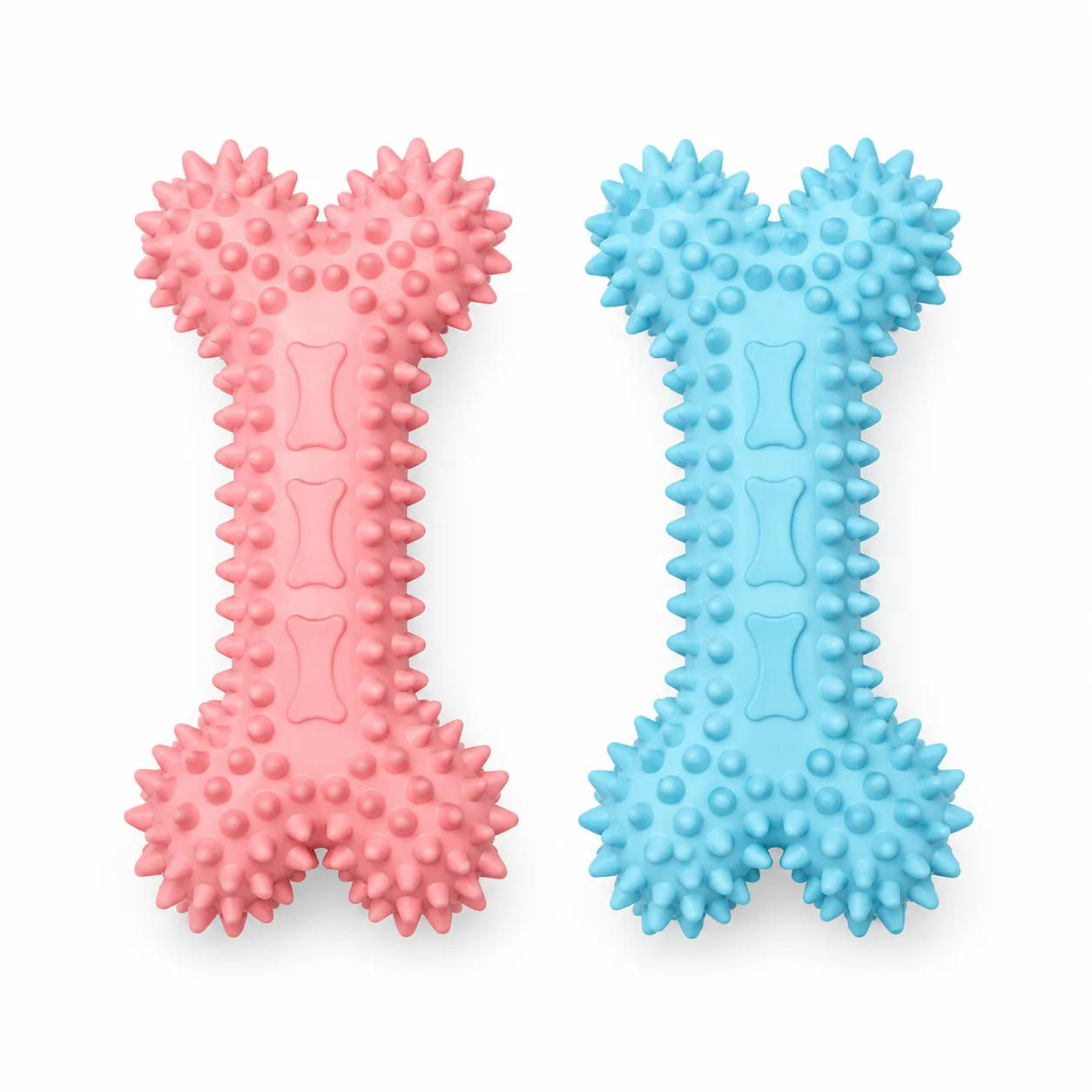
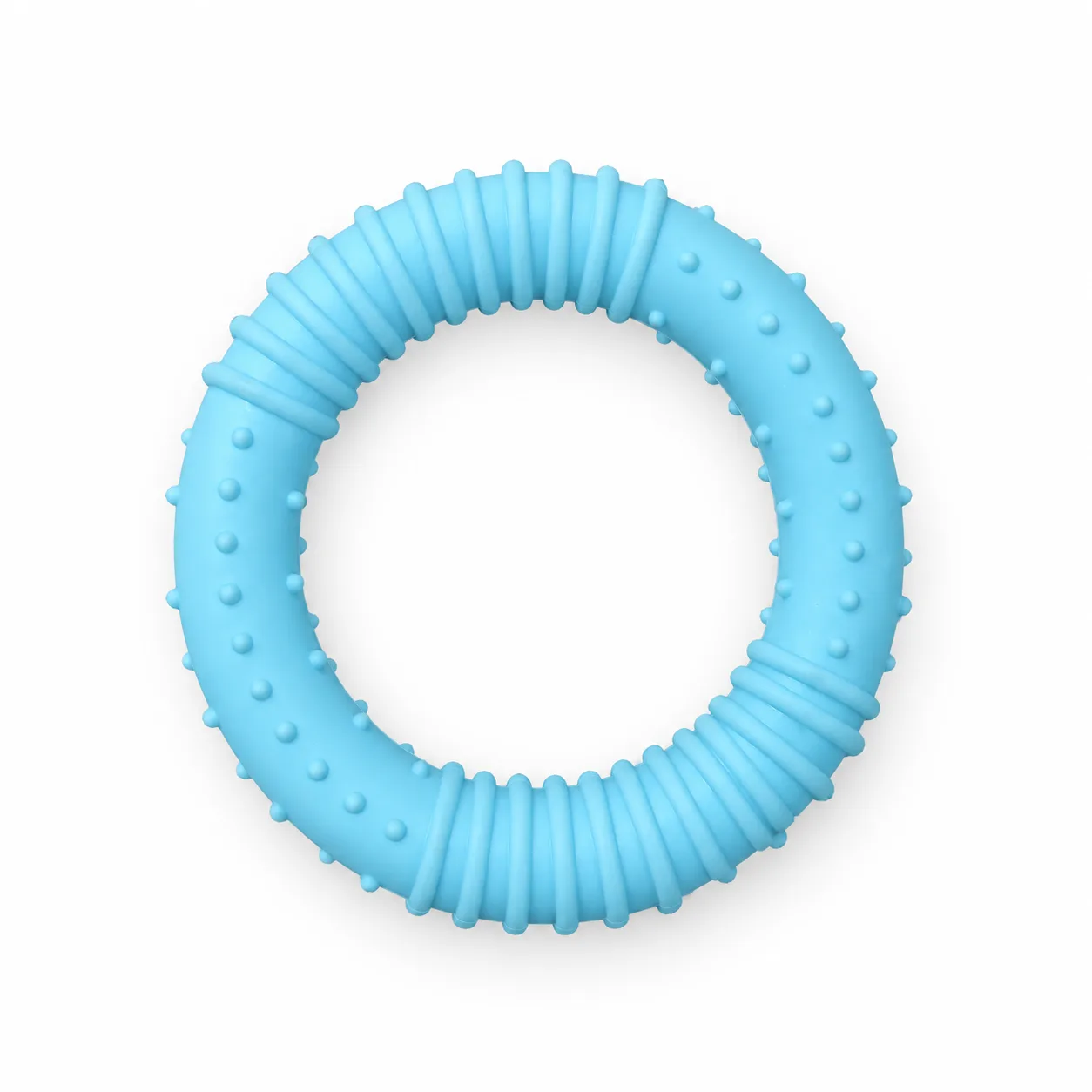
Give it something it's allowed to chew: a rubber teether like the Spike Bone or a teething ring. A rubber toy cooled in the fridge, or a wet flannel from the freezer, soothes the gums. If you fill a toy with peanut butter, check the label for xylitol. It's a sweetener that is poisonous to dogs.
Signs something has gone wrong
- Vomiting, especially again and again
- Gagging, retching or drooling
- Not eating, or seeming flat and tired
- Straining to poo, or not pooing
- A swollen or tender belly, or standing with the front end down and the back end up
Any of these after a chew or a bone means a vet visit, the same day. Repeated vomiting or a bloated belly with retching is an emergency.
Storing treats
Dried chews soak up moisture in the monsoon and can go mouldy. Keep the pack sealed, somewhere cool and dry, and throw away anything that has gone soft, smells off or has spots on it.
This is general advice from a pet shop, not a substitute for a vet. If your pet seems unwell, ring your vet.